

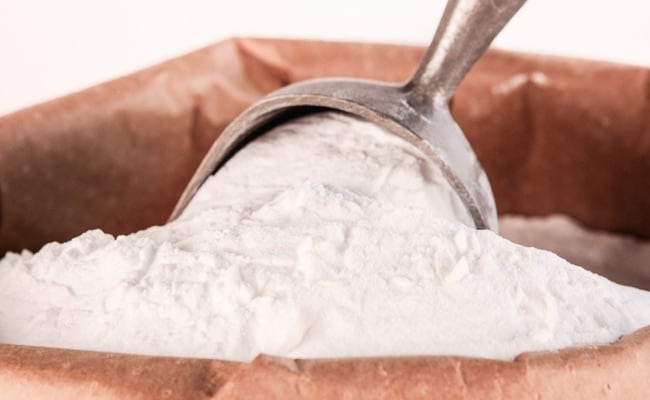
 Maltodextrin is a polysaccharide produced from starch by partial enzymatic hydrolysis of starch. Starch (amylum) is a carbohydrate consisting of a large number of glucose units linked by glyosidic bonds and is present in a large quantities in corn, potatoes, wheat etc Maltodextrin has a dextrose equivalence less than 20 which indicates that it has long carbohydrate chains along with 2-3% glucose and 5-7% maltose and is available in white hygroscopic spray-dried powder which is slightly sweet almost flavorless.
It is soluble and readily dispersible in water and slightly soluble to almost insoluble in alcohol. The body digests Maltodextrin as a simple carbohydrate and thus can be easily converted to instant energy. Due to this quality it is used in sports drinks and quick energy satchels for endurance athletes.
Use of Maltodextrin is also dependent on the grade that is the DE value for instance MD with low DE value are stickier and thus is used in gelatinous products like syrups and jams whereas high DE value MD freeze better and is used as a bulking agent in ice creams. Maltodextrin like starch consists of a particular ratio of amylose and amylopectin, different ratios.
Maltodextrin powder is used as a stabilizer, sweetener and thickener in many packaged foods. It is found in condiments like salad dressings, spice mixes, soups and sauces, baked goods, yogurt, nutrition bars, sugar-free sweeteners and meal replacement shakes. According to research most people consume maltodextrin frequently without experiencing any adverse effects.